
A homeowner's water heater dies. They search "water heater repair near me," click a site with the town's name in it, and call the number. Who answers? Sometimes it's the local plumber. Sometimes it's a call center, an AI screener, or a lead seller who passes the call to whichever plumber is paying this month. The homeowner has no idea.
How tracked numbers work
Call tracking is a normal marketing tool. A business uses a different phone number for each ad, website or mailer to see which ones bring calls. That's fine when it's your business, your number and your account.
The problem is when someone else owns the number.
In the rank-and-rent model, a lead seller builds a website for a service and a town, puts a tracked number on it, and rents the calls to a contractor. In a widely viewed August 2026 YouTube video on building AI microsites, the presenter described the setup this way:
> "Each website gets a unique phone number… answered by an AI agent… Qualifies the leads."
And: "I'm not answering the phone 24/7."
We covered the whole playbook in how lead-gen sites steal your customers' calls.
Why it matters to contractors
- You're renting your own customers. The site, the number and the rankings belong to the lead seller. If you stop paying, the number can go to your competitor the next day.
- You're paying for calls you could have gotten directly. That homeowner was looking for a local plumber. You.
- Shared leads. Some sellers pass the same lead to several contractors.
Why it matters to homeowners
- They think they're calling a local company.
- They may get a screener who won't say who's coming.
- They may get calls from several contractors after one inquiry.
The tells
For contractors and their customers:
- The person who answers won't say the company name, or says something generic like "service department."
- The website has an exact-match domain (service + town), no owner's name, no license number, no street address.
- Tiny footer text saying it's a "referral service" or "connects you with local providers."
- The same template on sites for "different" companies in different towns.
- A map listing with a suite number or a virtual-office address.
The best question to ask on the phone: "Are you the company that will do the work?"
How to own your phone line
- Use one main business number you own, with your carrier, in your name. If you can, port it so it stays yours forever.
- Put that number on your Google Business Profile, your website, your truck and your cards.
- If you use call tracking for your own ads, use your own account. On Google Business Profile, Google's guidance is to list the tracking number as the primary number and your main business number as an additional number, so your listing stays consistent.
- Answer it, or have an AI phone helper answer it in your business name. See AI phone help for a one-man shop.
- Never rent a site or number you don't own without understanding that the calls go away when the payments stop.
Call recording
Many tracking systems record calls. Recording laws vary by state; some require everyone on the call to agree. If you record calls on your own line, know your state's rules and tell callers.
The bottom line
The front door to your business is your phone number. Own it. As we say at Fixer School: stop renting your front door.
Source (1)
"How to Build 1,000 AI Microsites and Dominate an Entire Industry" (YouTube, August 17, 2026). Quotes are from the video.
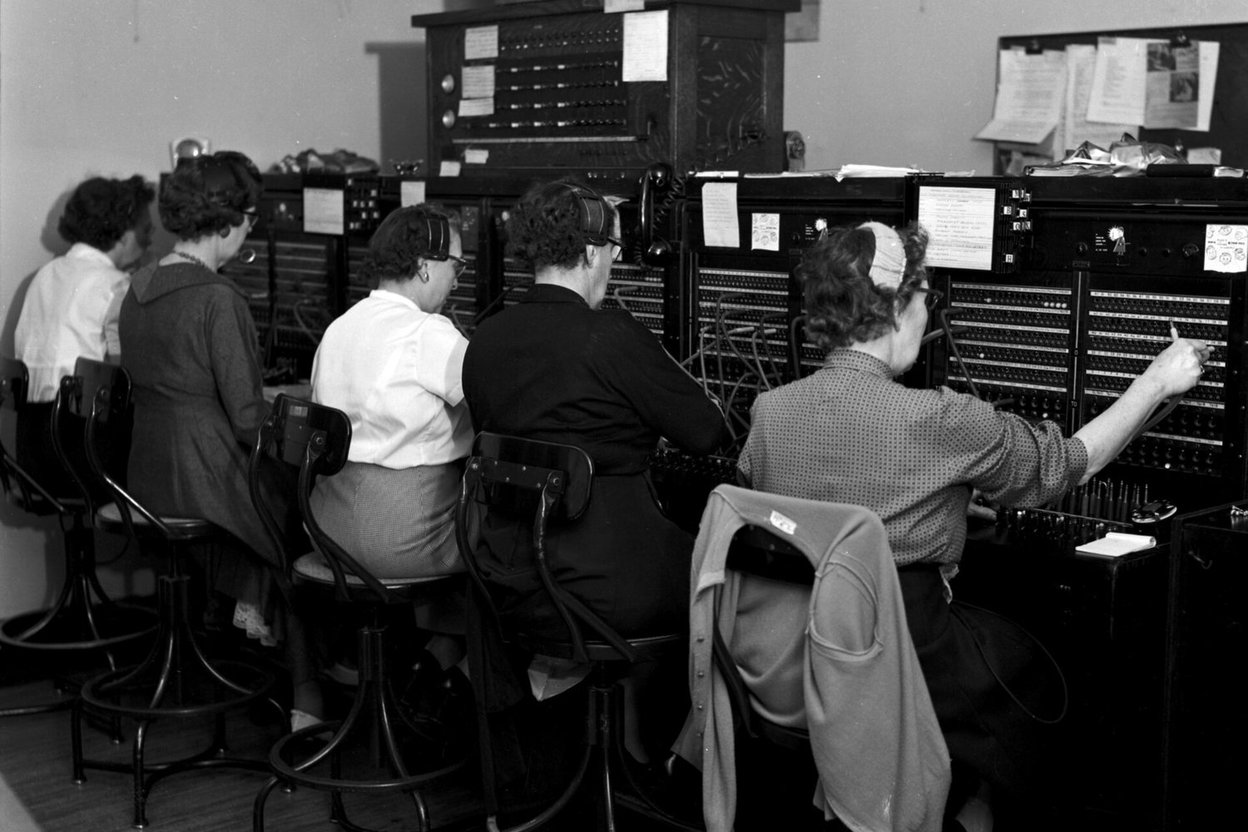
Photo: Switchboard operators, 1958 (54269050227).jpg) by Seattle Municipal Archives from Seattle, WA, CC BY 2.0.