
When you’re busy with a faucet job, a call asking for a price can put you on the spot. Give the Google AI caller a price range with clear conditions, not a firm sight-unseen quote and not a bare “I’d have to see it.” The caller sends your answer to the customer by email or text, so a useful range gives them something to consider while protecting you from guessing at the job.
The short answer: don't give a firm price, but don't give nothing
Give a range tied to the work you can describe, then say what could change it. A single price for an unseen faucet job may leave you committed to an amount before you know what the installation involves. Saying only “I’d have to see it” gives the customer no price to consider.
In Invoca’s late-2025 data, about half of the answered calls included no price. Home-service businesses often said they needed to visit the home first. That may feel cautious, but the AI passes along what you say, so a no-price answer reaches the customer as “no price.”
Try: “Labor runs $X to $Y if the shutoff valves work and you have the faucet. I’ll confirm from a photo.” Set the range using your own labor costs and local market, and name the conditions that could move the job beyond it. You give the caller useful guidance without pricing unknown work as if you had inspected it.
If you would rather not receive these calls, you can opt out through your Business Profile or ask the caller to remove your business from its list.
What these calls are
Google’s “Ask for Me,” later shown as “Have AI check pricing,” is a feature that calls local businesses and sends a summary to the customer. Google began testing it with nail salons and auto shops in 2025. At Google I/O on May 19, 2026, the company said home repair would be included and roll out to everyone in the United States that summer.
The AI calls businesses shown in local results and asks about pricing, availability, service area, and sometimes permits. It then emails or texts the customer a summary of the answers. Google says the calls are free for businesses and recorded.
The feature is unavailable in Indiana, Louisiana, Minnesota, Montana, and Nebraska. If a call comes in, treat it as a customer inquiry relayed by an automated caller: keep your answer clear enough to be passed along and useful enough for the customer to compare.
What other shops are doing
Invoca’s late-2025 customer data shows a sharp increase in these calls, with plumbing growing fastest. Call volume rose 162% in October and 324% in November. Twenty-six percent of calls went unanswered; plumbers answered about two in three. The calls still represented less than 1% of calls to the businesses in the data.
About half of the answered calls included no price, often because home-service shops said they needed a home visit. Invoca sells call-tracking services and recommends giving a price. ServiceFront, a competing vendor, warns that quoting a large job without seeing it can lose money. Both companies have a commercial interest in the advice they offer, so their recommendations are best treated as viewpoints, not neutral rules.
For a faucet inquiry, a conditional range gives you a practical middle path: answer the customer’s pricing question while making clear which job details your estimate assumes.
What a faucet job really runs
National price figures give you a rough check on your own faucet-installation rate, but your price should come from your area and costs. HomeGuide lists installation labor at $120 to $300, with an average of about $185. Its ranges are $120 to $250 for a kitchen faucet and $130 to $350 for a bathroom faucet.
Angi lists a kitchen faucet installation average of $262, with most customers paying $162 to $364. Big-box stores advertise installation starting at about $92 to $119. Hourly plumber rates range from $45 to $150 in one source and $45 to $200 in another.
These figures differ because they come from different sources and pricing approaches. Use them as national anchors to check whether your range is far outside the broad market, then set your own amount based on your location and operating costs. A national average cannot account for the shutoff valves, faucet type, or conditions at a particular home.
A script that protects you
Use a short script that states what your range covers, identifies common price drivers, and gives the caller a way to firm up the estimate. For example:
“For a standard faucet replacement, labor is $X to $Y if the shutoff valves work and the faucet is on site. Corroded shutoffs, a wall-mount faucet, or a customer-supplied faucet can change the price. My trip or minimum charge is $Z. Text me a photo and I’ll firm it up.”
Fill in the numbers with your own local pricing, and define what your trip or minimum charge covers. Keep the range attached to its conditions when you share it, so the customer receives a useful estimate rather than a bare figure.
Put the same range and conditions in your Google Business Profile Services list. Google’s example service for plumbers is “Install faucet,” and the service entry lets you add a price and description. Consistent wording gives you a ready answer when an automated call asks what the job costs.
The caller is seeking information for someone else, so answer the pricing question without demanding the caller’s contact details.
Opting out, or limiting it
You can turn off Google’s automated calls and text messages in your verified Business Profile. Go to More Business Profile settings > Advanced settings > “Google automated calls and text messages,” then switch off the available toggles.
You can also tell the caller, “Please remove my business from your list.” Google warns that manual calls may still come through after you opt out. Phone-tree mapping calls have a separate voicemail opt-out.
Choose whether you want these inquiries or prefer fewer automated calls, then use the profile controls or the spoken request that fits your preference.
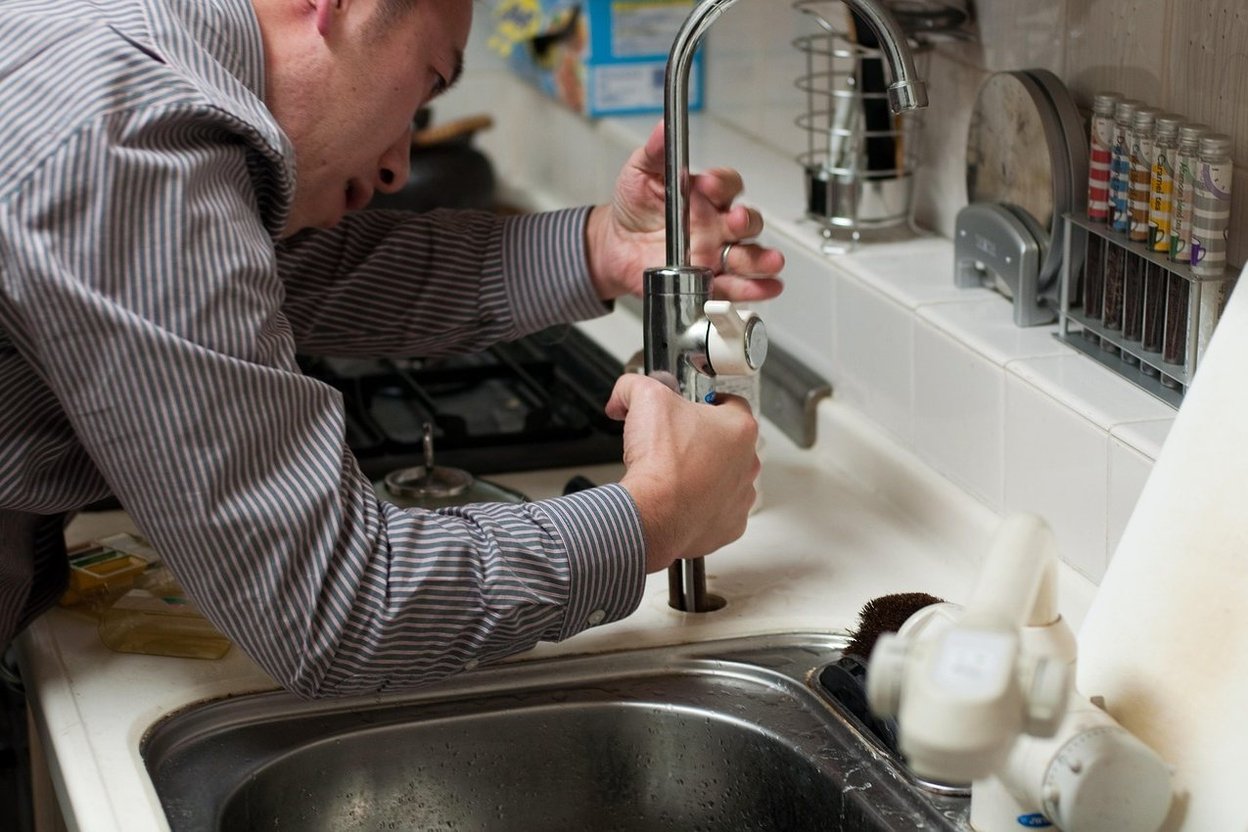
Photo by fran1 on Pixabay.