When you miss a call, the caller is already looking at the next name on the list. A text that goes out within a few seconds stops that. It says: a real business got your call, and you'll hear back.
What a good text does
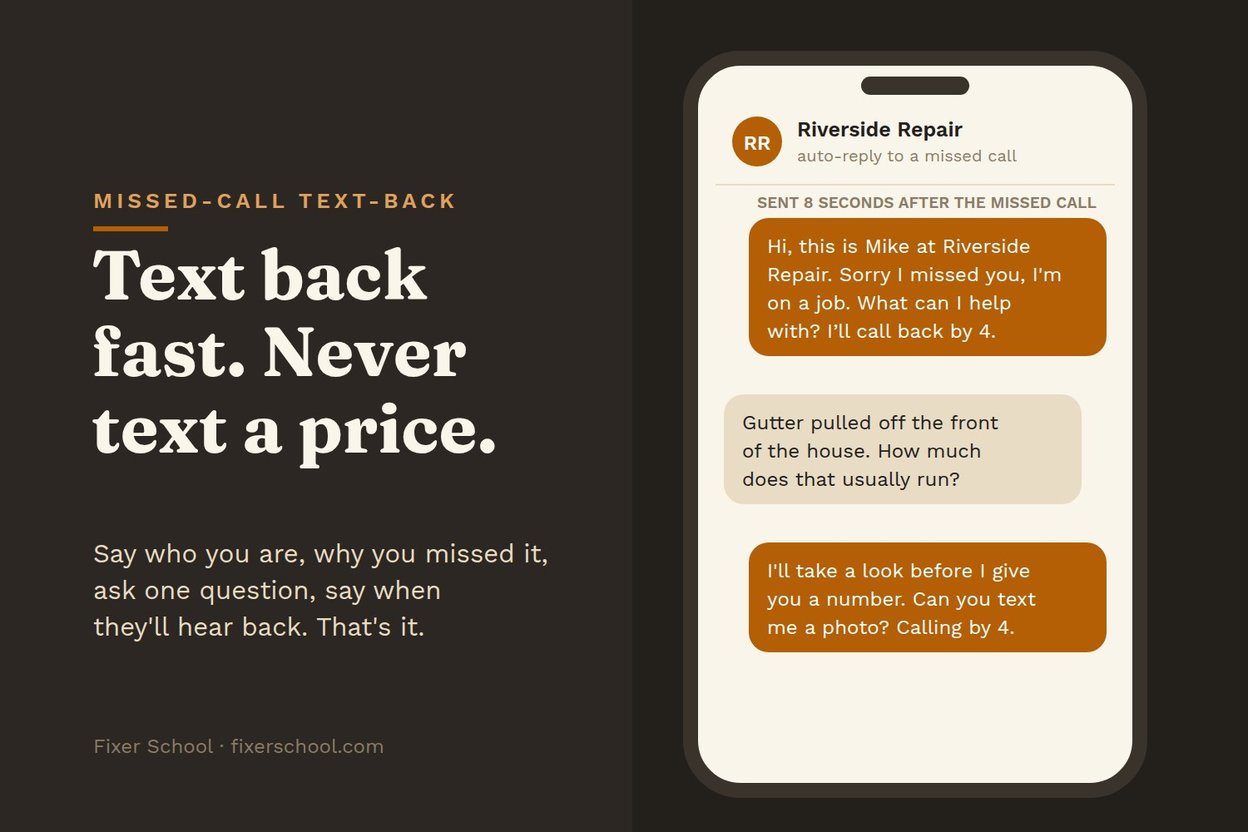
- Says who you are.
- Says why you missed it (you're on a job, not ignoring them).
- Asks one easy question.
- Says when they'll hear back.
What it never does
It never gives a price. Not a range, not "usually around," not "starting at." A price in a text is a price the customer screenshots. You haven't seen the job. See the one job an AI should never price.
Three versions to copy
Short: > Hi, this is Mike at Riverside Repair. Sorry I missed you, I'm on a job. What can I help you with? I'll call back by 4.
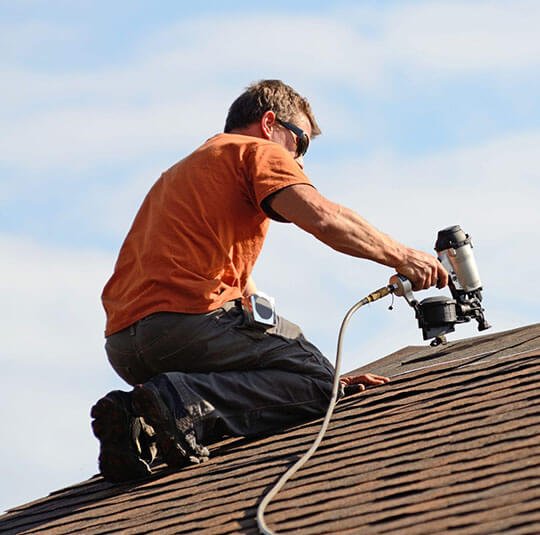
With photos: > Hi, it's Mike with Riverside Repair. I'm on a roof and couldn't grab the phone. What's going on? If you can, text me a photo or two. I'll call you back today.
After hours: > Thanks for calling Riverside Repair. We're closed for the night. Text back what you need and the address, and we'll call first thing tomorrow. If water or gas is involved, shut it off and call 911 if anyone's in danger.
Where it comes from
Most phone plans and business phone apps can send an automatic reply to a missed call. Many job-management apps you may already pay for include it too. Check before you buy anything new. See AI phone help for a one-man shop.
Where AI helps
You don't need AI to send the text. Where AI helps is the reply. When a customer sends back "my back door won't latch and there's a draft," you can paste it into ChatGPT or Claude and ask: what questions should I ask before I go look? It gives you three or four good ones in seconds. You still decide what to send.
Check it every week
Count how many missed calls got a text, and how many texted back. If people aren't answering, change the question. "What can I help you with?" works better than "Please describe your project in detail."
The text doesn't win the job. It just keeps the door open until you can.