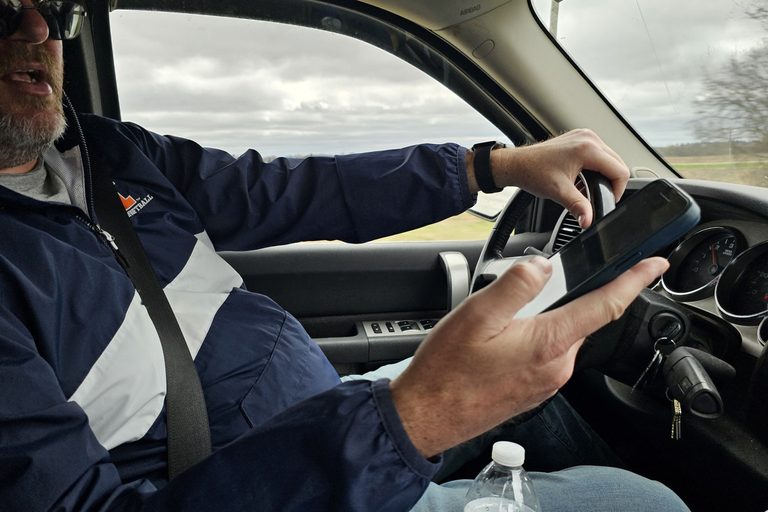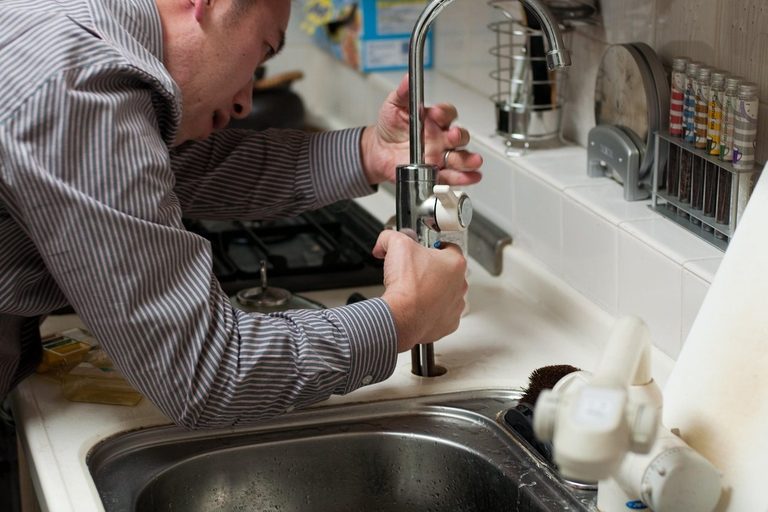
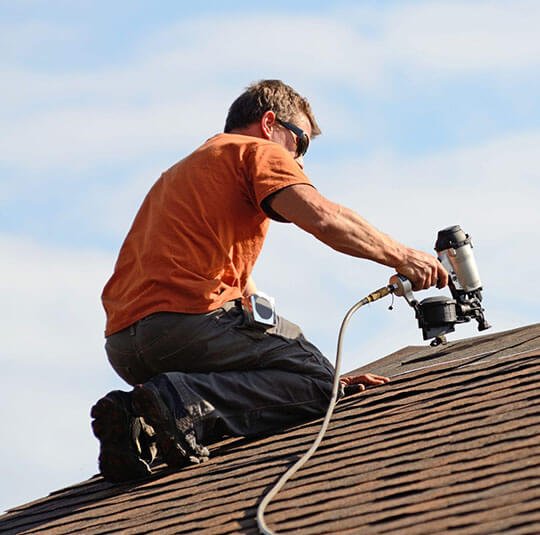
It's Thursday. Maybe it's Thanksgiving, maybe you're under a house all day, or maybe you finally took a day off. Your phone buzzes in your pocket and you let it go. That caller has a leak, a soft spot in the floor, or a piece of siding that blew off in last night's wind. What they hear in the next twenty seconds decides whether they wait for you or dial the next number on Google. Here's what to say: your business name, "closed Thursday, back Friday" with the real dates, when you'll call back, and one way to reach you sooner.
The short answer: what to say
Here's the plain script. Swap in your own name and dates and record it:
> "Hi, you've reached [Business Name], this is [Your Name]. We're closed Thursday, [date], and back Friday, [date], at [time]. Leave your name, your number and a quick word about the job, and I'll call you back Friday morning. If it's easier, text this number. If it can't wait, call [backup number]."
That's about 60 words. Read at a normal pace, it runs 15 to 20 seconds. That length is my rule of thumb, not an official standard. The sample greetings the phone companies publish run two to four sentences, and this fits inside that.
Every line has a job:
- The business name tells callers they dialed the right number.
- "Closed Thursday, back Friday" with actual dates answers what they most want to know: when they can reach you.
- The callback promise gives them a reason to leave a message instead of hanging up.
- The text or urgent option keeps the caller who won't wait.
If you're closed for Thanksgiving this year, it falls on Thursday, November 26, so your greeting would say "closed Thursday, November 26th, for Thanksgiving, back Friday the 27th at 7 a.m." Say the date out loud. "We're closed today" doesn't help someone who hears it Friday night and wonders which day you meant.
It takes about five minutes to record. Before you record it, though, it's worth knowing why it matters so much.
Why the greeting matters more than you'd think
Most people who reach a contractor's voicemail don't leave a message. They hang up and call the next contractor in their search results. A contractor-industry guide at Contractor Toolstack says exactly that, though it doesn't point to a study behind it.
The numbers you'll see on this come from companies that sell answering services and text-back tools, so treat them as directional. Several vendors say about 80% of callers won't leave a message. One cites a figure of fewer than 3% of callers leaving a voicemail at a service business. Vendor estimates of how many contractor calls go unanswered in the first place run from "over half" to 74%. Nobody independent has measured it for the trades.
Even if the real number is lower, you know how it goes. A homeowner with a problem calls three guys. The first one who sounds like a real business that will actually call back gets the job.
Speed counts too. A 2011 Harvard Business Review study by Oldroyd, McElheran and Elkington found that firms that contacted a lead within an hour were nearly 7 times as likely to qualify it as firms that waited longer.
I took every call myself for years. Customers loved it, and it wore me out. A good greeting is the cheapest way to stop losing the calls you can't take.
The parts of a good greeting, one at a time
Here are the parts, in the order callers should hear them.
1. Name first. Lead with the business name so callers know they reached the right number. OnSIP and Vivant both say to put it first. If they're unsure they got the right guy, they hang up.
2. The closure, early. Say you're closed in the first sentence or two, with the date. Don't make them sit through a speech to find out you're not there. OnSIP says to state your hours upfront "because this is something most callers want to know."
3. The reopening day. "Back Friday, November 27th, at 7 a.m." gives the caller something to plan around. "Back soon" doesn't.
4. A callback promise you can keep. The sample scripts use "as soon as possible," "within 24 hours" or "within 48 hours." Pick the one you'll really hit. If you say "Friday morning" and call at 4 p.m., you've already broken your first promise to a new customer.
5. What to leave. Ask for their name, number and a quick word about the job. "Leak over the back door" tells you who to call first on Friday.
6. One other way to reach you. Give a text number, an email or your website. One source says offering another way to reach you makes callers more likely to leave contact info you can use. Stick to one. A menu of five options is too much to take in.
7. Short and warm. A vague or long-winded greeting makes people hang up. Sound like a person, not a recording from the bank. Smile when you record it. People can hear it.
Three versions to copy
Fill in the brackets and read it out loud once before you record.
Version 1: Day off
> "You've reached [Business Name], this is [Your Name]. We're closed Thursday, [month and day], and back Friday, [month and day], at [time]. Leave your name, number and a short message about the job, and I'll call you back [Friday morning / by noon Friday]. Thanks for calling."
Version 2: Day off, with an urgent contact
Weave's out-of-office examples say to give the return date, and to add another contact for callers who can't wait.
> "You've reached [Business Name], this is [Your Name]. We're closed Thursday, [month and day], for [reason, if you want to say it], and back Friday, [month and day], at [time]. Leave your name, number and what's going on, and I'll call you back Friday. If it's an emergency, like [water coming in / something unsafe], call [backup name] at [backup number]."
Version 3: Text me
> "You've reached [Business Name], this is [Your Name]. We're closed Thursday, [month and day], and back Friday, [month and day]. The fastest way to reach me is a text to this number. Send your name, address and a photo of the job if you can. Or leave a message after the beep and I'll call you back Friday."
The photo request in Version 3 does double duty. You can look at it Thursday night with your coffee and know what you're walking into before you call back.
Catch the callers who hang up
A good greeting keeps more callers, but some will still hang up without a word. For them, you need something that reaches out to them.
Missed-call text-back. This sends an automatic text to anyone whose call you miss, usually within about 60 seconds. Something like: "Sorry I missed you, this is [Name] with [Business]. I'm out until Friday. What's the job?" One contractor guide claims it brings back 60 to 80% of the leads who would have hung up. It gives no source, so I'd call that a hopeful number, not a proven one. Still, a text that shows up while they're looking at the next guy's listing gives you a shot.
**An AI apprentice.** This is a step further: an assistant that answers or texts for you, gets the caller's name, address and what the job is, and hands you a clean list on Friday. You're still the one who calls back and gives the price. It does the busywork, and you stay the boss. AI is a terrible master, but a great servant.
Either way, the reason is speed. The faster someone hears back, even from an automatic text, the less likely they keep dialing.
Switch it back Friday
Last step, and the one people forget. A "closed Thursday" greeting still playing the next Tuesday tells callers you don't pay attention.
- Set a phone reminder when you record the closed greeting, for Friday morning before you start work.
- Re-record your normal greeting, or switch back to it if your phone lets you save more than one.
- Check your voicemail and texts first thing. Call back the people you promised Friday morning, in the order the jobs matter.
That's five minutes Thursday and five minutes Friday, and nobody gets left wondering if you're still in business.
Sources (8)
- OnSIP: After-Hours Voicemail and Auto Attendant Greetings
- Vivant: Voicemail greeting guidance
- Weave: Voicemail Greeting for Business
- Contractor Toolstack: How Contractors Stop Missing Phone Calls
- AnswerForce blog
- Phone2: The True Cost of Missed Calls
- Fusion CX: Contractor Phone Answering Service
- NextPhone: Reduce Missed Calls
Photo by Momentmal on Pixabay.