It's February, it's snowing, and your phone rings during dinner. A homeowner says there's ice along the edge of the roof and water coming through the kitchen ceiling. Can you come today? Yes, take that call. Ice dam work is busy and urgent. But take it in a way you can stand behind. Remove the ice safely or fix the leak, and tell the customer straight that the roof isn't the cause. Then send them to whoever fixes the real problem. It's fall now, so this is a good time to get your answers ready.
Short answer: take the call, sell the right job
In a bad winter, these calls pile up quickly. In Massachusetts in February 2026, the Boston Globe reported that one roofing company missed over 500 calls in the first week of the surge, and one ice dam removal outfit was booking 30 to 40 emergency jobs a day. Many people don't call until they see damage inside. As that roofer told the Globe, by then "you already have damage."
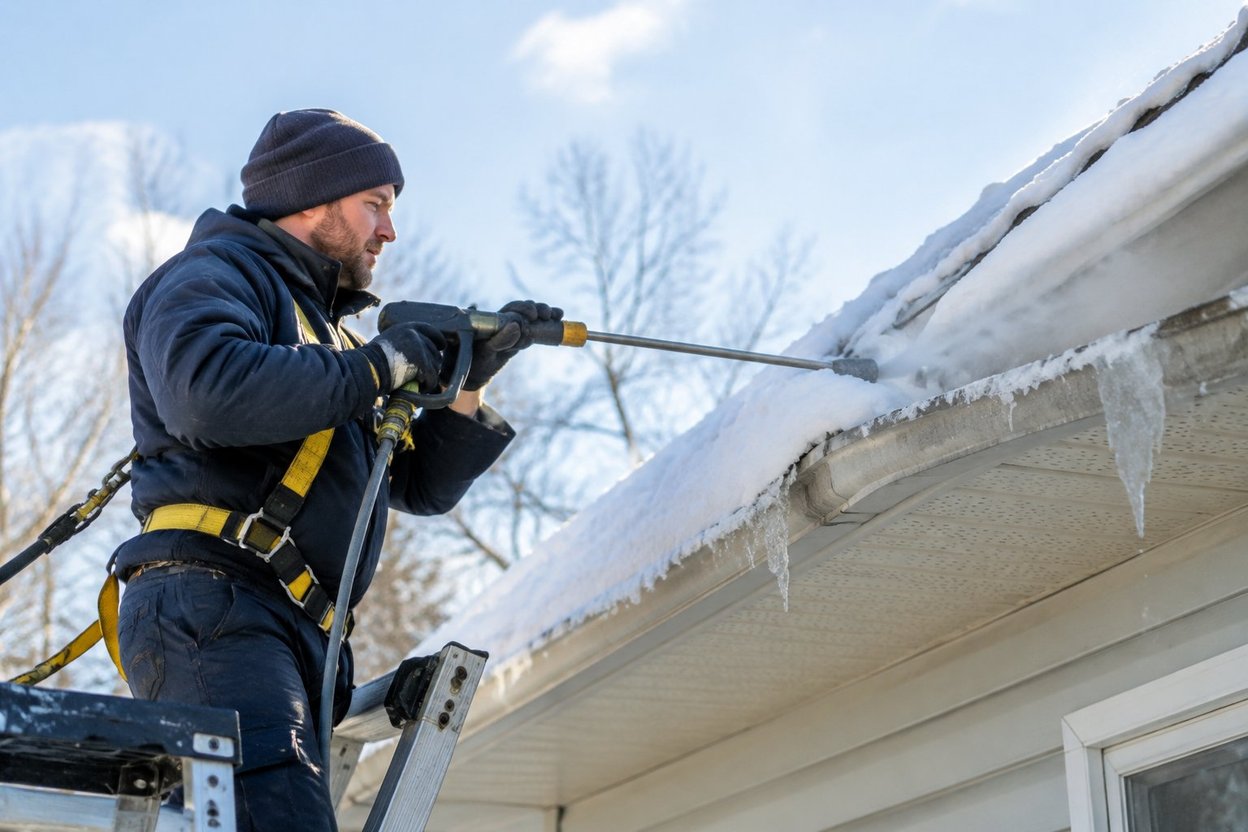
Homeowners shouldn't be doing this work themselves. Bob Vila's site calls DIY ice breaking one of the most dangerous DIY projects and says to hire a roofing company for steaming, because steaming takes commercial equipment. Englert, the roofing manufacturer, says fixing ice dams after they form is difficult and dangerous and best left to professionals.
So here's how to handle it:
- If you own a steamer, take the removal job and price it properly.
- If you don't, take the leak repair or refer the steaming to someone who does it. Keep the customer for the roof, gutter, or siding work that comes after.
- Either way, be honest about what caused it. That honesty is what earns you the spring job and the review.
What an ice dam really is
An ice dam doesn't start on the roof. It starts in the house. Heat leaks into the attic and warms the roof sheathing, which melts the bottom layer of snow. The water runs down to the eave, which sits out past the warm part of the house and stays cold. There it freezes again. The ice keeps building until it forms a dam, and the next melt has nowhere to go.
Common places the heat gets out:
- Recessed can lights
- Bath and kitchen exhaust fans
- Plumbing and HVAC pipes running through the ceiling
- Leaky attic hatches
Clogged gutters don't cause ice dams, though they can make the iced-up area bigger. Once a dam forms, Englert says it can push water up under the shingles and into ceilings, walls, and floors. A big dam that breaks loose can tear off shingles and gutters with it.
This matters for how you sell the job. The roof alone doesn't cause an ice dam, and new shingles won't cure one. If you sell a reroof as the fix and the dams come back next winter, that customer is going to remember who told them it would work.
What to tell the customer on the phone
Keep it short and plain. Here's a script you can adapt:
"First question: is water coming inside right now, on a ceiling, a wall, or around a window? (If yes, get the details and tell them to move furniture and put down buckets or towels until you get there.)
There are two separate jobs here. The first is getting the ice off safely so the water stops backing up. That's done with steam, which melts the ice without hurting the shingles. The second is the real fix, which is stopping the heat that leaks out of your house and melts the snow. That's usually attic air sealing and insulation. A new roof by itself won't fix it.
Steam removal is usually billed by the hour, and most contractors have a two-hour minimum. Around here it runs [your rate]. I'll tell you what I think it will take before I start.
Until someone gets there, please don't go up on a ladder. Don't chip at the ice with a hammer or hatchet, and don't use a torch or any open flame. Those crack shingles and start fires. Don't throw rock salt up there either, because it can corrode roofing. If you want to put something on it, calcium chloride is the safer choice. And don't knock icicles down from underneath."
If they've been raking the roof, tell them one more thing. Bob Vila warns that raking only the bottom few feet of snow can cause a second "double dam" higher up the roof.
Before you hang up, write down what they told you. You'll want it for the insurance section below.
Removal methods and what they cost
Steam is the safe method. It's what the Globe, Bob Vila, and Fixr all point to. Prices are all over the map, so set your own rate based on your region and how busy the season is:
- Fixr (updated January 2025) lists steam at $400 to $600 an hour, and says an average roof takes about 2 to 3 hours.
- Bob Vila's site (updated February 2026) quotes "market rates in the $400 to $700 per hour range nationally."
- During the Massachusetts surge, the Globe reported one company charging $1,000 an hour with a two-hour minimum, and about $1,000 to clear snow off an average roof.
Chipping is cheaper. Fixr lists $200 to $300 an hour over 4 to 6 hours, and also calls it one of the riskiest methods because the tools can break the roofing. Torches and hammers are how roofs get damaged. If you'd chip a customer's roof for less money, you're the one who'll be explaining the broken shingles in spring.
Some customers will ask about heat cables. Bob Vila says a professionally installed de-icing system adds $2,000 to $4,000 to a roofing project. Heat cables deal with the ice. They don't stop the heat loss that causes it.
The lasting fix, and where you stop
Removal buys the customer time. The fix is inside the house.
Englert's list of fixes:
- More insulation on the attic floor
- Sealed, IC-rated can lights
- Insulated covers on attic hatches
- Exhaust fans ducted outside through the roof or a wall, not dumped into the soffit
- A ridge vent paired with continuous soffit vents, with baffles at the eaves
Green Building Advisor's editor goes further. In his view, most ice dams come from leaks in the home's air barrier, and ventilation should be the "third, not the first" weapon. He also says most contractors don't understand the causes and often prescribe the wrong fix. That's one person's opinion, and some readers pushed back. Still, the safe order to explain to a customer is to fix air leaks and insulation first and treat ventilation as backup.
Your piece of the job is the roof itself. That means venting, the drip edge, and the ice barrier underlayment along the eaves when you reroof. Whether an ice barrier is required, and how far up the roof it has to go, depends on your local adopted code, so check it before you quote.
You stop at the attic floor. When the problem is air leaks, the editor recommends a home performance contractor or energy rater who tests with a blower door, such as one certified by RESNET or BPI. Make the referral. The customer gets the right fix, and you don't get blamed when the next dam forms.
Insurance and your own risk
Customers will ask whether insurance covers it. Don't promise anything.
- Progressive says dwelling coverage may pay for roof, wall, and ceiling damage when water backs up under the shingles, if the damage is sudden and accidental. It says removing the ice dam itself is generally not covered.
- Policygenius says removal as prevention, with no damage, likely won't be paid. If the dam has already caused damage, both the repairs and the removal are likely covered. It puts average removal at about $1,200.
- Both say claims can be denied for poor maintenance, such as a roof that was already in bad shape and leaking slowly.
Policies and state rules vary. Tell the customer to call their agent, and protect yourself:
- Take photos before, during, and after the job.
- Write down what you found and what you did.
- Bill removal and repair as separate line items so the adjuster can see what's what.
Those notes help the customer with the claim, and they help you if anyone questions your work later.
When I was doing siding and handyman work, I took every call myself. The customers liked that, and it wore me out. An ice dam storm brings that problem on all at once: hundreds of missed calls in a single week, from people with water in their kitchens. Get your phone script ready before Thanksgiving, decide now whether you'll steam or refer, and line up the insulation contractor or energy rater you'll send people to.
Sources (7)
- Boston Globe: Ice dams overwhelming Massachusetts contractors
- Bob Vila: Ice Dams
- Englert: How to Prevent Ice Dams
- Green Building Advisor: Prevent Ice Dams With Air Sealing and Insulation
- Fixr: Ice Dam Removal Cost
- Progressive: Ice Damage to Home
- Policygenius: Does Homeowners Insurance Cover Ice Dam Damage?