
HVAC is a seasonal business with brutal peaks: the first hot week of summer and the first cold night of fall. A small shop can't hire an office full of dispatchers for those weeks. AI can cover a lot of that gap.
- No-heat and no-cool intake. When the phone rings off the hook, an AI assistant can take the call or text, collect the address, the system type, what's happening and how urgent it is (no heat with elderly or infants in the home, for example), and line them up for you.
- Maintenance plan reminders. Seasonal tune-up reminders by text or email, scheduled automatically, keep your maintenance customers coming back, and that's steady income in the slow months.
- Quotes for replacements. Equipment quotes with options (good, better, best) are tedious to write. Talk them through and let AI format them.
- Explaining options. Heat pumps, rebates, efficiency ratings: AI can draft explanations you check, so customers understand what they're buying.
- Rebate and incentive paperwork. Organize the documents customers need for utility rebates or tax credits, checking current program rules yourself.
- Reviews and follow-ups after every job.
The competition is changing
Private-equity firms have been buying up HVAC and plumbing shops across the country and running them with big marketing budgets and call centers. A small local shop can't outspend them, but it can outserve them: answer faster, follow up personally, and show up as a real local business in Google and AI search results.
Keep it safe
AI doesn't replace training, manufacturer specs or refrigerant handling rules. It handles the office work so you can do the field work.
See also AI for handymen and how lead-gen sites steal your customers' calls.
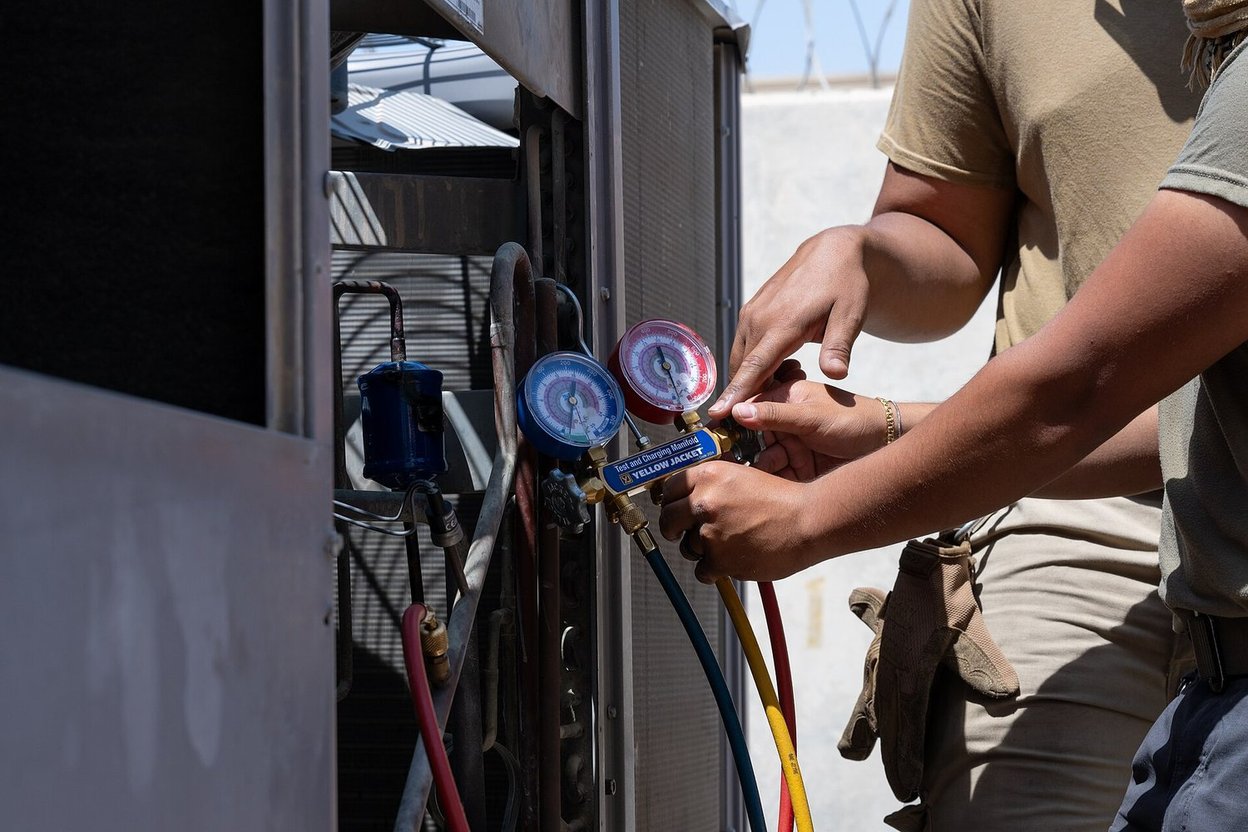
Photo: 379th ECES HVAC technicians combat rising temperatures (8502255).jpg) by U.S. Air Force AFCENT by Airman 1st Class Derrick Bole, Public domain.